
Thick hair is a gift that can feel like a burden when it falls flat at the roots and balloons at the ends. The shaggy layered bob solves both problems: strategic layers remove bulk where it weighs the cut down, while shorter top pieces create airy, lived-in volume. The result feels lighter, moves freely, and styles with minimal effort.
Below are twenty shaggy bob ideas designed for thick hair in 2026, each with styling tips and notes on who it flatters most. Bring your favorite to your stylist and ask about dry cutting, since many of these techniques show best when hair is cut in its natural fall.
1. The Classic Shaggy Bob with Curtain Bangs
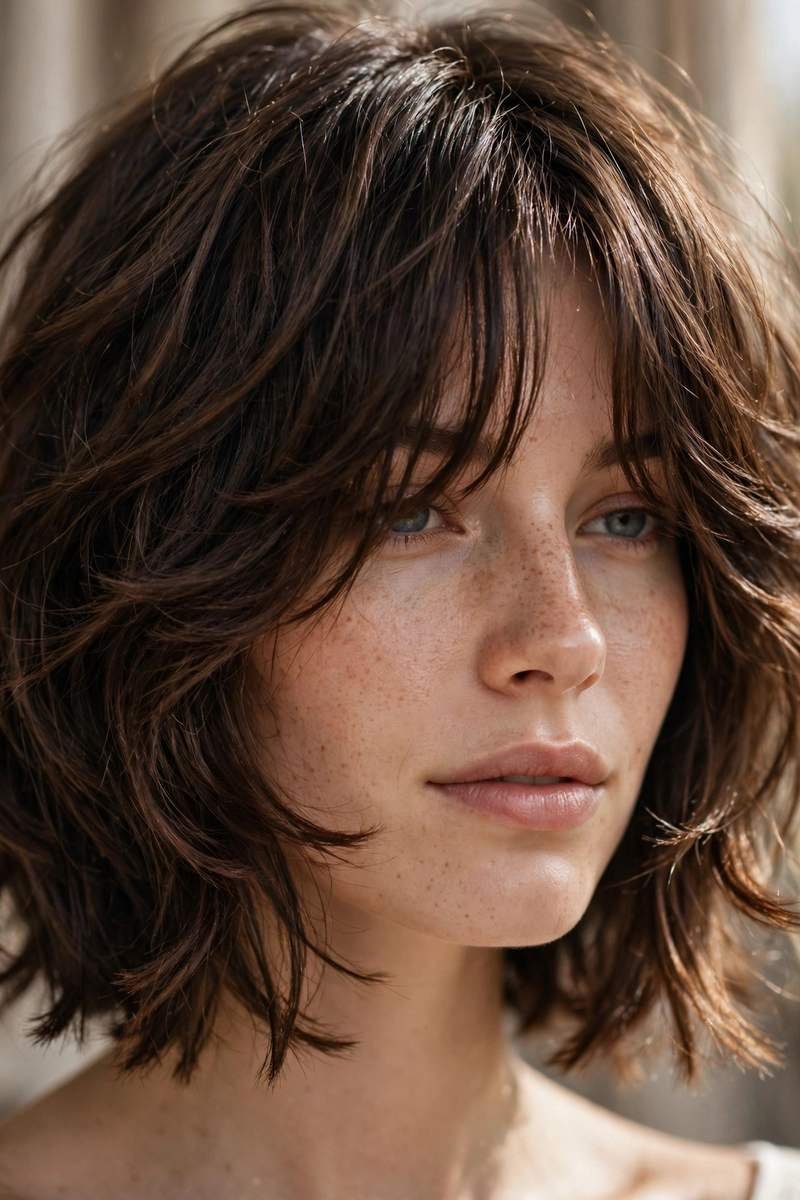
A jaw-to-neck bob with textured layers and curtain bangs that part softly in the middle. The bangs break up density around the face while mid-length layers create bounce. Polished enough for the office, undone enough for the weekend.
Style with a large round brush, lifting at the roots. Flatters oval, square, and heart faces; the fringe softens strong jawlines. Ask your stylist to debulk the ends with point cutting so the silhouette stays light.
2. Choppy Jaw-Length Shag
Shorter and sharper, ending at the jawline with deliberately uneven, piece-y ends. The shorter length removes serious weight so the cut feels bouncy, and the choppy finish keeps it from looking like a traditional neat bob.
Scrunch sea-salt spray into damp hair and air dry, or flat-iron select pieces with a slight bend. Best for straight to wavy textures and great on petite frames since it shows off the neck.
3. The Feathered Shaggy Lob
A longer take landing between chin and collarbone, with feathered ends that taper softly instead of cutting off blunt. The feathering removes bulk through the bottom third, exactly where thick hair tends to triangle out.
It goes up into a bun, takes heat waves beautifully, and air-dries with minimal frizz. Works on all face shapes and is a safe first shag for anyone nervous about going short.
4. Razor-Cut Textured Shag
A straight razor carves wispy, feathered layers through thick hair, removing significant weight while leaving soft, lived-in ends. The texture is finer than scissor layers, so the cut moves beautifully and never looks bulky.
Wash, apply lightweight leave-in, and air dry — the razor texture does the work. Best on smooth, fine-to-medium thick hair; razors can encourage frizz on coarse, porous hair. Trim every eight to ten weeks.
5. Shaggy Bob with Micro Bangs
Bold and editorial: a textured shaggy bob paired with short micro bangs. The fringe draws attention to eyes and cheekbones while the shaggy layers keep the look soft and modern rather than severe.
Micro bangs need daily styling — a quick flat-iron pass and a dab of pomade. They suit oval and long faces best and need trimming every three to four weeks, but the payoff is a genuinely head-turning cut.
6. The Voluminous Round-Brush Shag
A medium shaggy bob cut to flip and curve, styled with a full round-brush blowout for maximum bouncy volume — the kind that makes thick hair look intentional and expensive.
Rough-dry to eighty percent, then work in sections with a medium round brush, rolling up and away from the face. Volumizing mousse at the roots makes a real difference. The crown height flatters round faces especially well.

7. Face-Framing Shaggy Layers
Shorter pieces around the face are thick hair’s secret weapon. This variation keeps the back fuller while carving layers from the cheekbones down, lightening the front without sacrificing lush density.
Part in the center and curl just the face-framing pieces away from the face. The vertical lines slim round and square faces. Mention your glasses at the appointment — layers can be cut to sit beautifully around frames.
8. The Wolf-Cut Bob Hybrid
The wolf cut tamed into bob length: short, choppy crown layers with longer textured ends. The dramatic layer difference creates enormous crown volume — exactly what thick hair needs to avoid looking flat on top.
Embrace the mess with matte clay or texturizing powder at the roots, and diffuse upside down for lift. Suits oval and heart faces. The crown layers need a trim every six to eight weeks or the shape collapses.
9. Tousled Shag with Undone Waves
A shoulder-grazing shag with loose, undone waves and straight ends. The straight tips keep it modern and prevent the triangle shape, while mid-length waves create the illusion of even more volume.
Wave with a large-barrel iron, brush out with fingers, and leave the last inch uncurled. Universally flattering on every face shape, and the best grow-out style if you are transitioning between lengths.
10. Shaggy Inverted Bob
Shorter in the back, longer in the front, with shaggy texture on top. The stacked graduation at the nape removes bulk from thick hair’s heaviest zone while the longer front pieces stay feminine and face-framing.
A quick round-brush pass at the crown adds polish. The longer front slims round faces beautifully. Keep the nape tidy with trims every six weeks, since the stacked back loses its shape first.
11. Shag with Wispy Bottleneck Bangs
Bottleneck bangs — narrow at the top, widening at the cheekbones — are curtain bangs’ softer cousin. They remove weight from the front and blend seamlessly into the shag’s side layers for a cohesive, feminine finish.
Blow-dry with a small round brush, curving outward at the ends. They grow out into curtain bangs gracefully, making them lower maintenance than blunt fringe. Lovely on heart-shaped and oval faces.
12. Air-Dried Natural Texture Shag
Cut with your natural texture in mind so the layers fall where your hair wants them without heat styling. On thick, wavy, or curly hair it removes the bulk that causes puffiness while letting your pattern create the volume.
Leave-in conditioner, curl cream, scrunch, and go — diffuse ten minutes for extra root lift. Best for thick curly and coily hair. Find a stylist experienced with your texture; curl-by-curl cutting makes all the difference.

13. Deep Side Part Shaggy Bob
A deep side part is the fastest volume trick there is, and with a shaggy bob it is doubly effective. Flipping most of the hair to one side creates instant crown lift, and the asymmetric fall looks deliberately editorial.
Blow-dry roots in the opposite direction first, then flip, and set with texturizing powder. Universally flattering and especially good for balancing asymmetrical features. It also shows off earrings beautifully.
14. The Shaggy French Bob
Parisian chic meets rock texture: a chin-length French bob with tousled layers and piece-y ends. The short length removes maximum weight, and the textured finish keeps dense hair from looking helmet-like.
Rough dry, add texture cream, and leave it — deliberately imperfect. Suits oval, long, and heart faces; on round faces, graze just below the chin. One of the chicest low-effort cuts possible.
15. Choppy Shag with Dimensional Highlights
Strategically placed highlights — balayage ribbons or face-framing pieces — make layers read deeper and more separated, creating the illusion of even more volume on thick hair. Light pieces catch the eye and trace the cut’s movement.
Keep the base near your natural color and go one to three levels lighter for low-maintenance regrowth. Works on every face shape, and it is the fastest way to make an existing shag feel brand new.
16. Shag with V-Cut Layers
Length through the back in a soft V point, with heavy layering through the sides and front. The V silhouette removes bulk from the perimeter while the front keeps all the shaggy volume — fullness where you see it, lightness where you feel it.
Show off the V with smooth blowouts or loose waves. Suits long and oval faces. The key is soft, textured ends rather than a sharp point — ask your stylist to keep it modern, and trim every eight weeks.
17. The Bouncy Blowout Shag
Nineties supermodel energy: long, bouncy layers cut specifically to support a big voluminous blowout. Layers flip and curve instead of lying flat, so thick hair gets that expensive finish that holds for days.
Velcro rollers are the cheat code — set top sections for ten minutes after blow-drying. Ask your stylist to thin the interior so the blowout has bounce rather than just bulk. The crown volume flatters round faces.
18. Shaggy Bob with Long Curtain Fringe
All the face-framing softness of bangs without the commitment. A long curtain fringe starting at the cheekbones melts into the side layers, removing front weight while staying long enough to tuck behind the ears.
The lowest-maintenance fringe — it grows out invisibly and styles with or without heat. Flattering on every face shape and especially good for softening square jawlines. If you are fringe-curious, start here.
19. Textured Shag with Balayage Ribbons
Hand-painted balayage ribbons woven through the shag amplify every layer, making volume visible — you can literally see the dimension. The most three-dimensional color option for this cut, growing out more softly than foils.
Ask for ribbons following your part and face-framing layers, one to two levels lighter than your base. A gloss every eight to twelve weeks keeps it fresh. The added dimension makes fine-textured thick hair look noticeably fuller.
20. Sleek Top, Voluminous Ends Shag
The most polished entry: a smooth, controlled crown with mid-lengths and ends exploding into textured volume. The contrast is striking and modern, and it solves the classic thick-hair problem of too much root volume.
Flat-iron the top smooth, then volumize only the ends with a curling iron or round brush. Excellent for oval and long faces since the sleek crown adds no height. The shag for formal events when you want texture with polish.
Final Thoughts
Twenty ideas, one principle: the right layers make thick hair feel like the asset it is. Whether you choose the curtain-bang classic, the razor-textured wash-and-go, or the full bouncy blowout, the shaggy bob removes bulk intelligently and builds volume where it flatters.
Bring reference photos to your appointment and be honest about your styling routine — the best shag is the one you will maintain. Ask about dry cutting and interior debulking. With the right cut, thick hair stops being a project and starts being the whole point.




Leave a Reply