
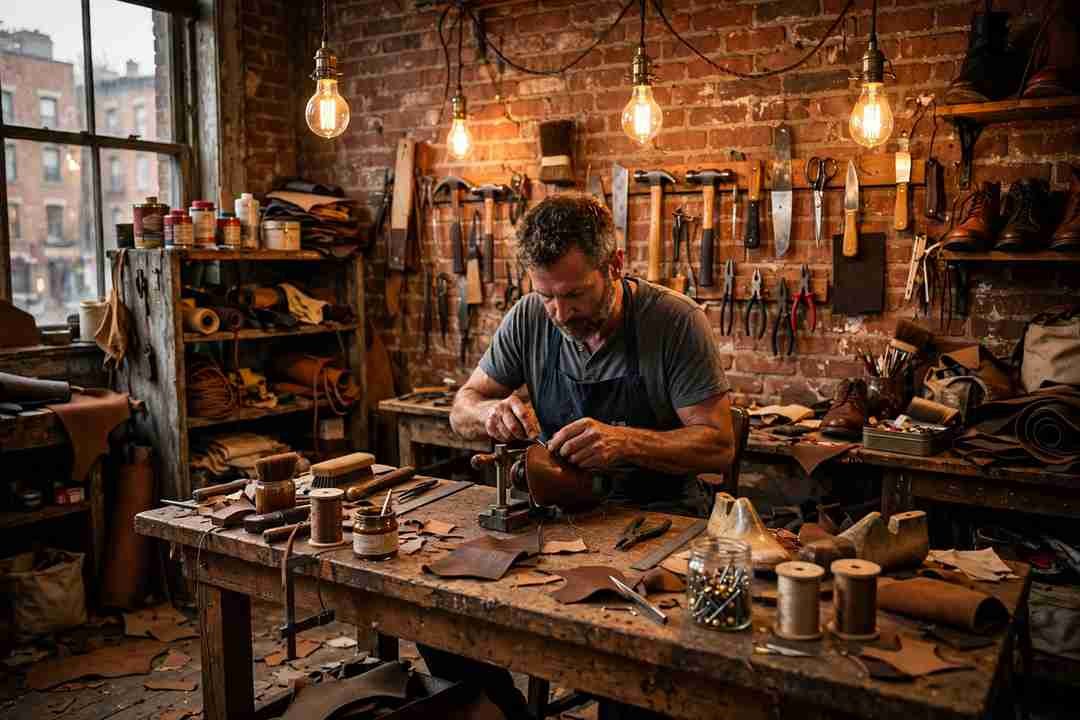
In a Bushwick workshop that smells of leather, glue, and machine oil, a quiet revolution is happening one pair of shoes at a time. While the sneaker industry churns out millions of disposable pairs destined for landfills, Cobbler Bushwick has built its reputation on the opposite proposition: that old shoes deserve a second life, and that the most sustainable pair you’ll ever own is the one you already have.
The shop’s artisanal method of upcycling shoes blends old-world cobbling techniques with a streetwear sensibility, transforming worn-out sneakers, boots, and dress shoes into one-of-a-kind pieces. This isn’t just resoling; it’s reimagining. Here’s how the process works, why it matters, and what it reveals about the future of footwear.
What Shoe Upcycling Actually Means
Upcycling sits a level above recycling. Where recycling breaks materials down into lesser forms, upcycling elevates them, turning a discarded object into something of equal or greater value. In footwear, that means taking shoes that would otherwise be thrown away and rebuilding them into pieces with new life, new character, and often new functionality.
Cobbler Bushwick’s approach treats every pair as raw material with a history. Scuffs, creases, and wear patterns aren’t flaws to hide; they’re the starting point for the design. A pair of beaten sneakers might become a hybrid boot-sneaker with a new leather upper; a tired dress shoe might get a rugged commando sole and a new lease on street life. The result is footwear with a story, something no factory-fresh pair can offer.
Step One: Assessment and Deconstruction
Every upcycling project begins with triage. The cobbler examines the incoming pair the way a doctor examines a patient: what’s the structural condition of the upper, is the midsole still viable, can the outsole be saved or must it be replaced? Not every shoe is a candidate; some are too far gone, and honesty about that is part of the craft.
Deconstruction is surgical. Stitching is picked out by hand, soles are separated with heat and careful leverage, and components are sorted into what can be reused, what can be repurposed, and what must be replaced. This is slow work, often taking longer than the rebuild itself, but it’s what separates artisanal upcycling from a quick patch job. The goal is to preserve as much of the original as possible while preparing a clean foundation.
Step Two: Sourcing and Material Alchemy
Here’s where the artistry enters. Cobbler Bushwick maintains a library of salvaged materials: leather offcuts from other projects, vintage fabrics, deadstock laces, hardware from deconstructed pairs. The upcycler’s eye sees potential where others see scraps, matching textures and colors the way a painter mixes pigments.
Material selection follows both aesthetic and structural logic. A new panel must bond properly with the old upper, flex at the same points, and age gracefully alongside its neighbors. Leather is skived to matching thicknesses, fabrics are reinforced where stress demands it, and every combination is tested before it’s committed. This material alchemy, part science, part intuition, is what gives upcycled pairs their distinctive patched-together beauty.
Step Three: The Rebuild
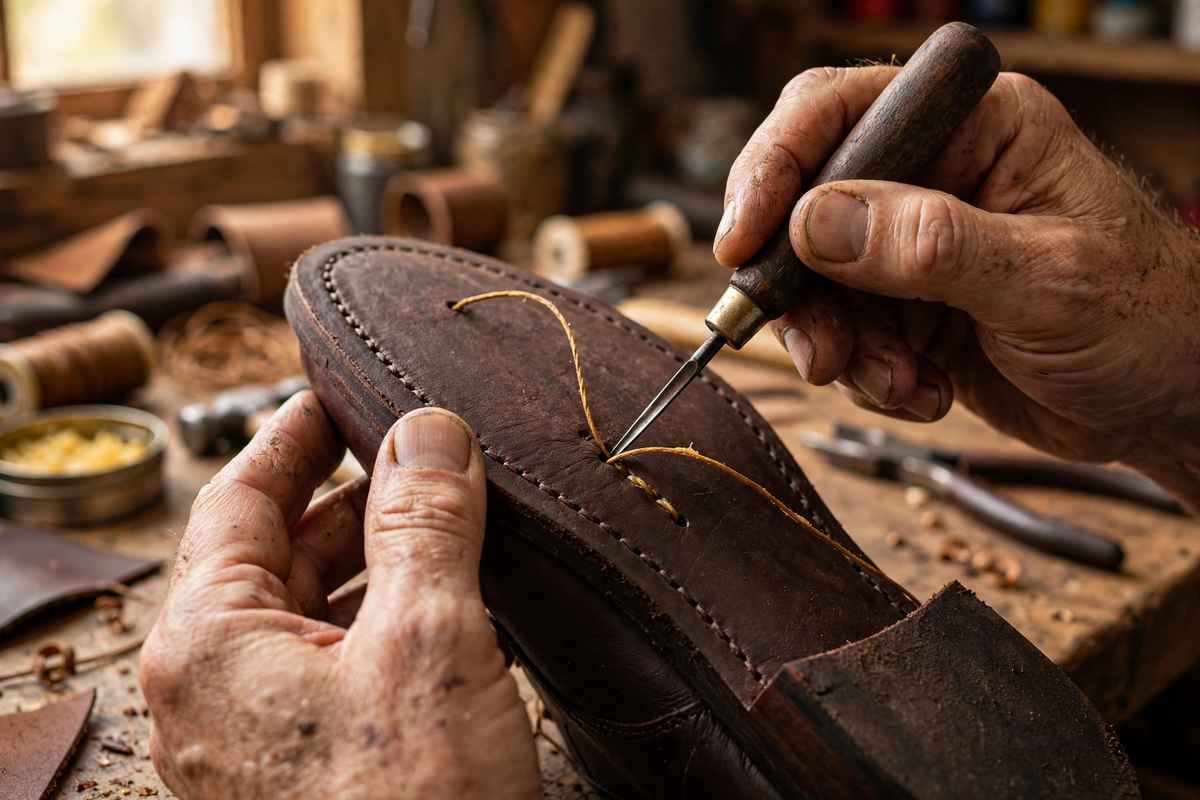
With materials selected, the rebuild begins, and this is where traditional cobbling technique does the heavy lifting. New panels are cut, shaped on the last, and stitched using saddle-stitching or machine work depending on the design. The cobbler works the way cobblers have for centuries: patiently, precisely, and with total attention to how the shoe will actually function on a foot.
Soles are where the transformation is often most dramatic. A dress shoe might receive a chunky recycled-rubber outsole for street durability; a sneaker might get a leather midsole for a hybrid look. Each sole is attached using a combination of traditional cementing and stitching, built to outlast the original construction. The rebuild typically takes several days of bench time, a universe away from the seconds-per-pair pace of factory production.
Step Four: Finishing and Character
The final stage is where upcycled shoes get their soul. Edges are burnished, leather is conditioned and polished, and deliberate distressing might be added to unify old and new materials into a coherent whole. Some pairs get hand-painted details, custom dye work, or embroidered accents that mark them unmistakably as one-offs.
Crucially, the finishing never tries to make the shoe look new. The philosophy is wabi-sabi applied to footwear: the history remains visible, honored rather than hidden. A faint crease from the shoe’s first life sits alongside fresh stitching from its second, and the combination is more beautiful than either alone. This is the aesthetic signature of true upcycling.

Why This Matters: The Sustainability Case
The numbers are stark. Hundreds of millions of pairs of shoes end up in landfills each year, where their mixed materials, glued layers of leather, foam, rubber, and textile, make them nearly impossible to recycle. The average sneaker takes decades to break down, leaching chemicals the entire time.
Artisanal upcycling attacks this problem at its root by extending product life, the single most effective sustainability intervention in fashion. Every pair rebuilt is a pair not manufactured and a pair not landfilled. Beyond the environmental math, upcycling challenges the psychology of disposability, teaching customers to see their possessions as durable, repairable, and worthy of investment. One cobbler’s workshop won’t solve the industry’s waste crisis, but it models the alternative.
How to Commission an Upcycling Project
Thinking about giving your own shoes a second life? Here’s how to approach it:
- Start with good bones. The best candidates are well-made shoes with solid uppers but worn soles or dated styling.
- Bring references, not demands. Share images of styles you like, but trust the craftsman’s judgment on what’s structurally possible.
- Budget for bench time. Artisanal work is priced by the hour; expect to invest significantly more than a basic resole.
- Allow real time. Quality rebuilds take weeks, not days. Rush jobs and craftsmanship don’t mix.
- Maintain the result. Condition leather regularly, rotate your wears, and bring the pair back for check-ups.
- Embrace the unexpected. The best upcycled pieces evolve during the process; leave room for happy accidents.
Caring for Upcycled Footwear
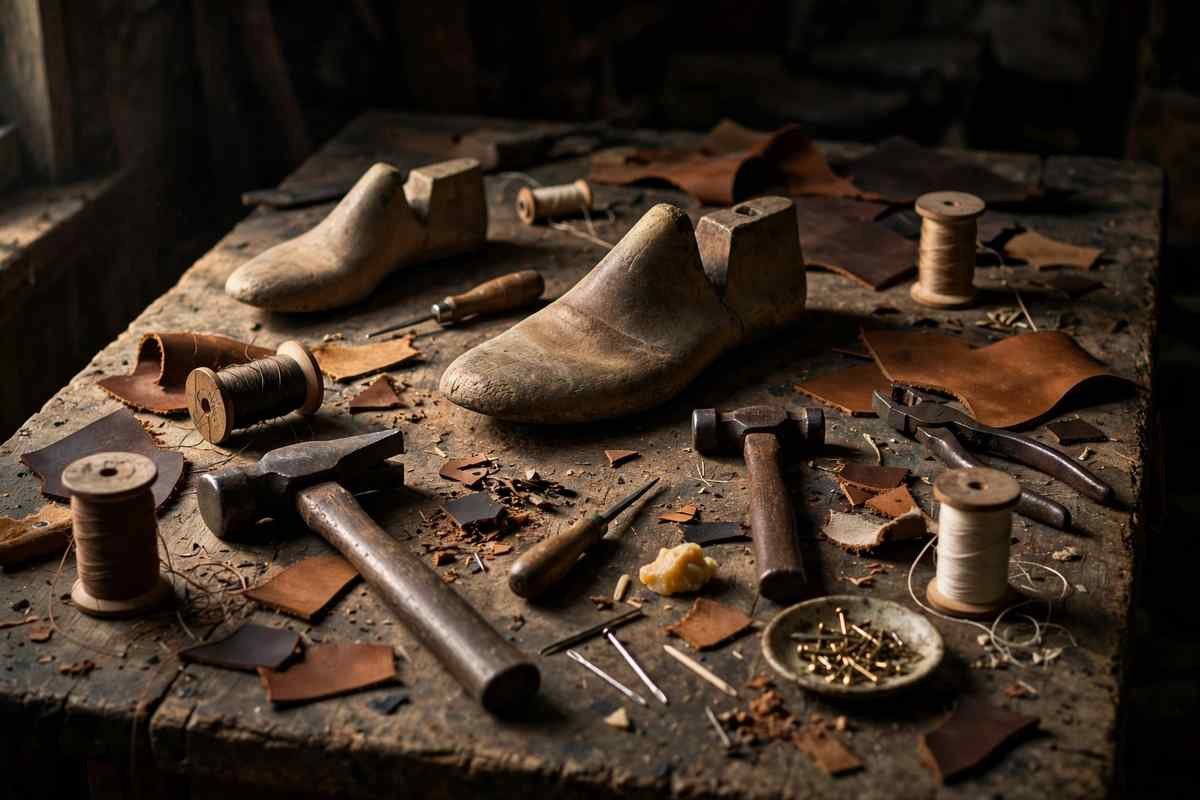
Upcycled shoes reward the same care as any quality footwear, with a few extra considerations. Mixed materials may need different treatments, leather panels want conditioning while fabric sections prefer gentle brushing. Store pairs with shoe trees to maintain shape, and address small issues promptly before they compound. Many upcyclers offer lifetime maintenance for their rebuilds, a relationship model that factory brands can’t match. Think of your cobbler the way you think of your barber: a long-term partnership, not a transaction.
Conclusion
Cobbler Bushwick’s artisanal method is more than a repair service; it’s a philosophy of consumption. In a culture trained to discard, the workshop insists that things can be saved, transformed, and loved harder the second time around. Every rebuilt pair is a small argument for a different relationship with what we wear: slower, more personal, and built to last. The future of footwear might just be hiding in its past, waiting on a cobbler’s bench in Bushwick.



Leave a Reply