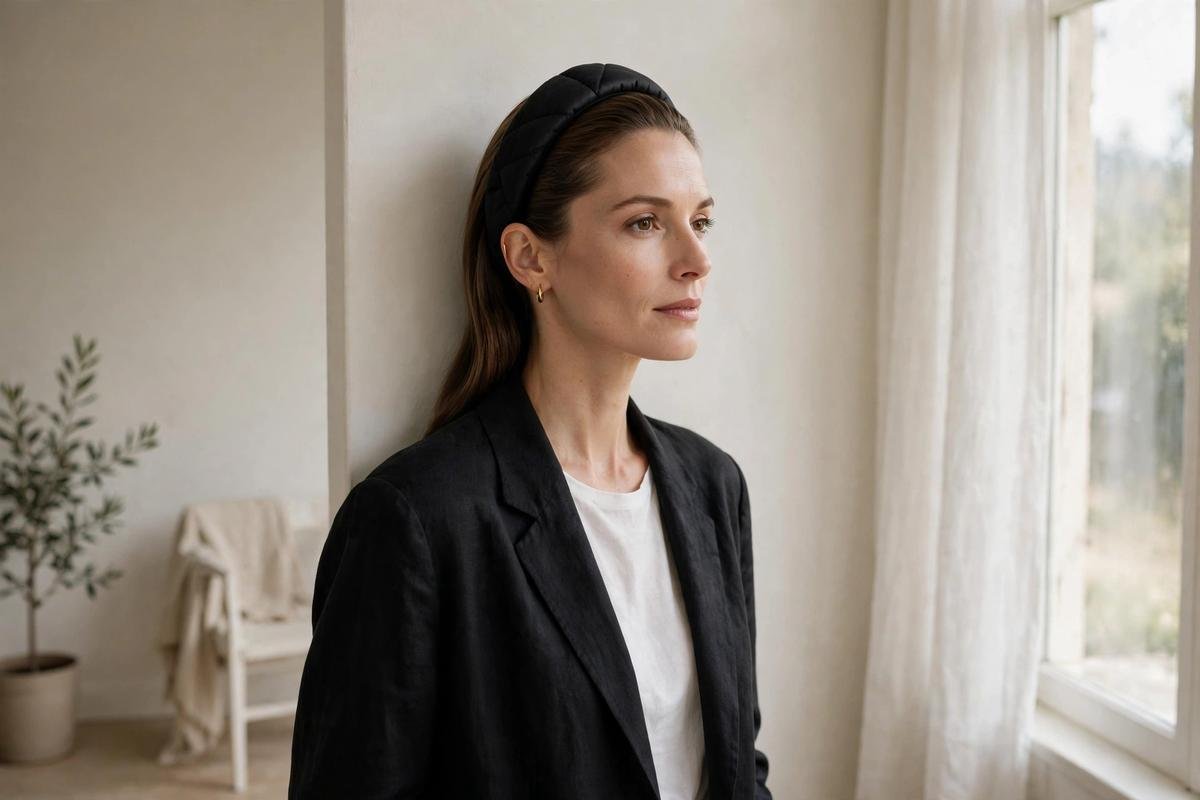
Of all Carolyn Bessette-Kennedy’s style signatures, the headband might be the most quietly radical. In an era of elaborate updos and high-maintenance hair, she reached for the simplest accessory imaginable and made it iconic. The padded black headband, worn with sleek pulled-back hair, became such a consistent part of her look that it functioned almost like a personal logo, instantly recognizable and endlessly imitated.
There’s a reason the look stuck. The headband solved the eternal tension between polish and ease: it kept hair perfectly in place with zero apparent effort, framed the face beautifully, and added just enough structure to her minimalist outfits. Here’s the story of the accessory, the variations she wore, and how to make it work today.
The Signature: Padded Black Perfection
Her most famous headband iteration was the padded black style, worn pushed back from the forehead with the hair sleek underneath. Sometimes it was satin, sometimes velvet, but it was always black, always simple, and always perfectly placed. The padding gave it presence without bulk, creating a clean arc that elongated the face and added quiet drama.
What made it work was contrast. Against her blonde hair, the black band created a striking graphic line. Against her minimal clothing, it added just enough interest. It was the rare accessory that functioned as both practical tool and style statement, keeping flyaways in check during long public appearances while looking completely deliberate.
The Variations She Wore
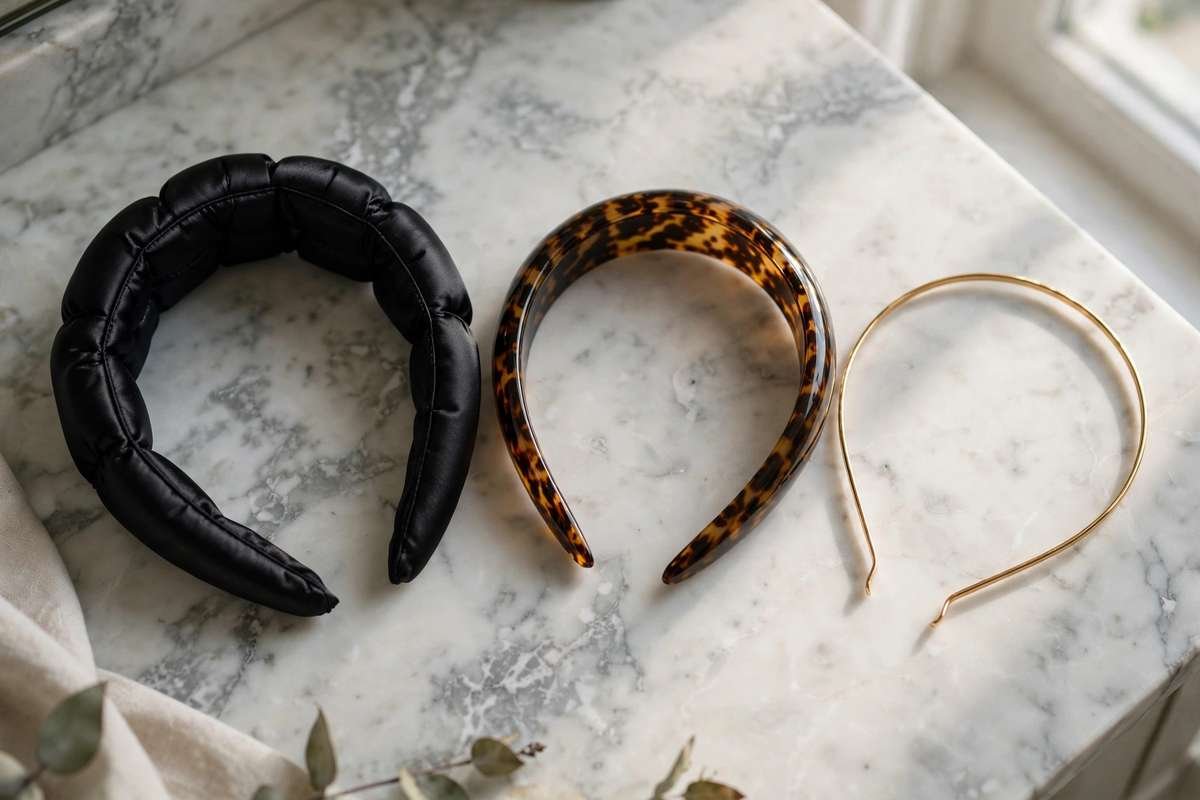
While the padded black version is the most remembered, her headband repertoire had range. She wore thin tortoiseshell bands for daytime polish, delicate metal styles that nearly disappeared into the hair, and occasionally wider fabric versions that read more casual. Each variation served the outfit rather than competing with it.
The through-line was always restraint. No embellishments, no logos, no bows or knots. Her headbands were architectural rather than decorative, chosen for line and proportion rather than ornament. This discipline is what elevated a humble accessory into a signature; anyone can wear a headband, but few can wear one with such consistent intention.
Why It Worked: The Styling Logic
The headband solved several problems at once. It created a finished hair look without the time investment of styling, which suited her famously low-maintenance beauty approach. It added height and structure at the crown, balancing the clean lines of her slip dresses and tailored coats. And it drew attention to the face, framing her features the way a good picture frame serves a painting.
There’s also a psychological dimension. The headband reads as controlled and composed, qualities that served her well under intense public scrutiny. In photographs, it gives her look a sense of completeness, the feeling that every detail has been considered. It’s armor disguised as an accessory.
How to Wear Headbands Now
The headband revival has been building for years, and her approach remains the gold standard. The modern way to wear it borrows her discipline while adapting to current hair and fashion:
- Start with sleek hair. The look works best on smooth, pulled-back hair; use a light serum to tame flyaways first.
- Place it right. Position the band about an inch behind the hairline, not pushed far back like an Alice band.
- Match your outfit’s mood. Black padded bands suit polished looks; tortoiseshell works for daytime; thin metal for evenings.
- Keep everything else minimal. Let the headband be the hair statement; skip competing accessories.
- Consider your face shape. Padded bands add height, which flatters rounder faces; thinner bands suit longer faces.
- Commit fully. A headband worn tentatively looks like an afterthought; wear it like you mean it.
Shopping Guide: Finding Your Band
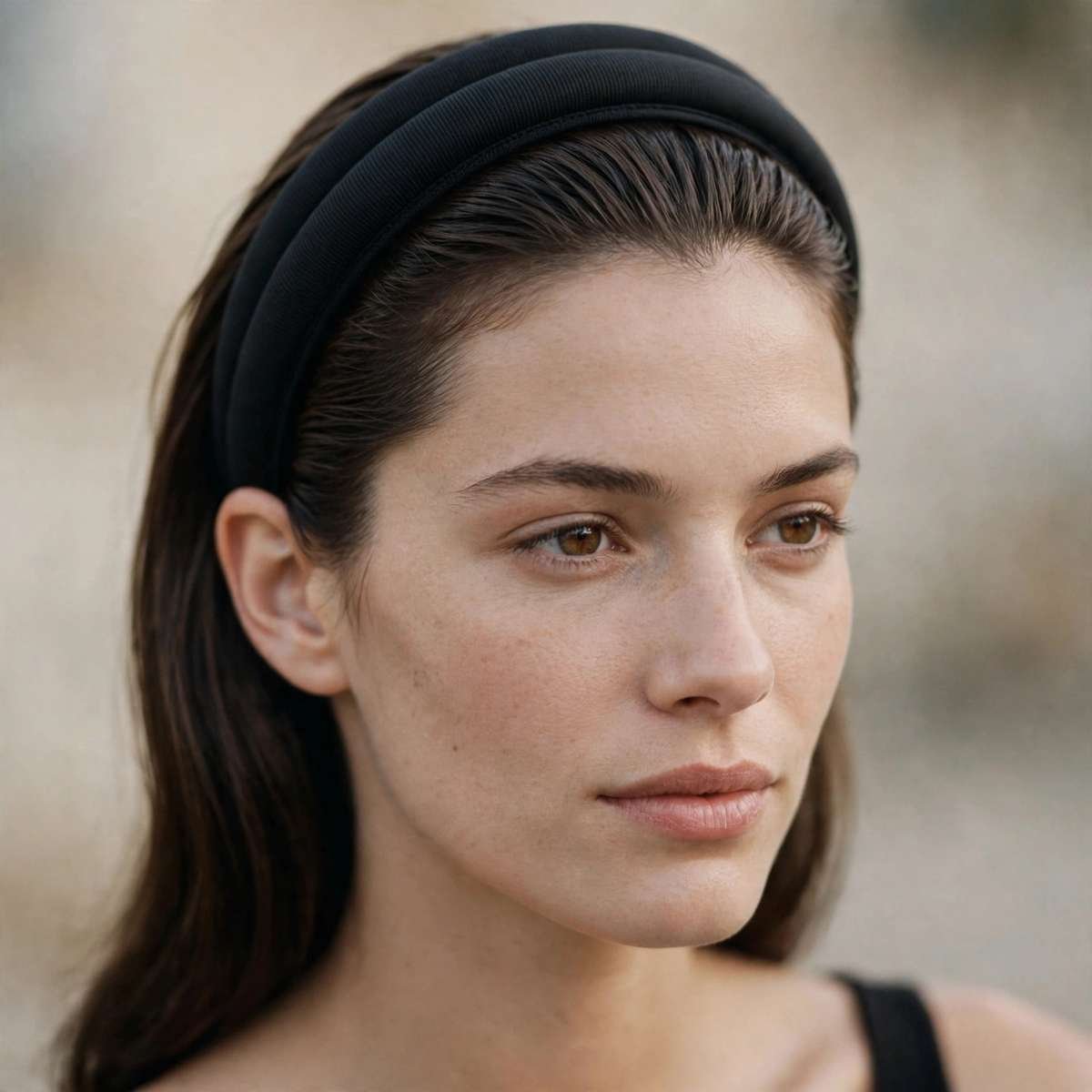
Quality matters enormously with headbands because cheap versions cause the literal headache of the title. Look for bands with comfortable inner padding or silicone grips that distribute pressure. Velvet and satin coverings look luxurious but can slip; textured fabrics stay put better.
For the signature padded black look, seek out well-constructed bands with even padding and no visible seams. Tortoiseshell acetate versions offer a daytime alternative with vintage charm. Thin metal bands in gold or silver work beautifully for evening and suit finer hair types. Expect to invest a reasonable amount for comfort; this is an accessory that touches your head all day, and quality construction prevents both slipping and headaches.
Avoiding the Headache: Comfort Tips
The title’s joke has a real basis: poorly made headbands genuinely hurt. Prevent the headache with these practical tips. Choose bands with flexible cores that adapt to your head shape rather than rigid ones that press at single points. Take breaks during long wears, and alternate headband days with other styles. If you wear glasses, look for thinner bands that sit comfortably alongside frames. And never sleep in a headband, no matter how good it looks.
Conclusion
A headache to remember, indeed. Carolyn Bessette-Kennedy’s headband endures because it distilled her whole philosophy into a single accessory: simplicity executed perfectly, polish without visible effort, and the confidence to let one quiet detail do all the talking. In a world of maximalist accessories, her restraint feels more radical than ever. Find your band, wear it well, and remember that sometimes the smallest choices make the biggest statements.





Leave a Reply