
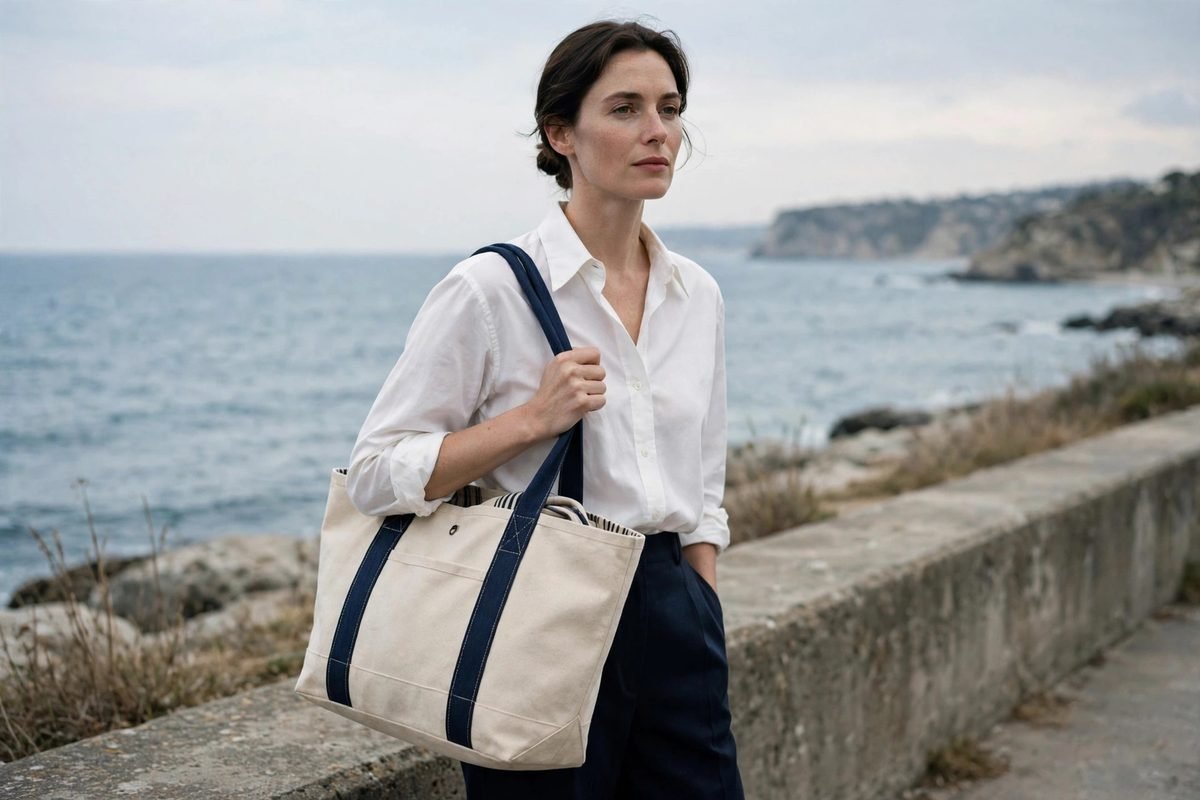
Some bags become famous because a designer put them on a runway. Others become famous because a woman with impeccable taste carried them everywhere, until the bag and the woman became inseparable in our minds. The L.L.Bean Boat and Tote belongs firmly in the second group, and no one proved its quiet power better than Carolyn Bessette-Kennedy, whose sailing trips and off-duty summer days turned a humble canvas workhorse into an enduring style symbol.
The Boat and Tote was never meant to be a fashion object. L.L.Bean introduced it in 1944 as Bean’s Ice Carrier, a sturdy bag for hauling blocks of ice. Made from heavy canvas with reinforced handles and a flat bottom, it simply refused to wear out, and over the decades it took on firewood, picnic supplies, library books and beach towels. By the time Carolyn was photographed with hers along the New England coast, it already had a fifty-year reputation for durability and zero pretension.
That is exactly why it suited her. Carolyn’s style was built on restraint: clean lines, neutral colors, perfect basics and nothing that shouted for attention. A logo-heavy designer tote would have said too much. The Boat and Tote, with its plain canvas body and contrasting handles, said exactly enough — that she valued things that worked, lasted and never tried too hard. Decades later, her tote remains the reference point for anyone discovering that true luxury can look like an affordable canvas bag carried with total confidence.
The Sailing Story Behind the Icon
Carolyn and John F. Kennedy Jr. spent many summers the way old New England families had for generations: on the water. Sailing trips around Martha’s Vineyard, weekends in Hyannis Port and quiet days near the Kennedy compound formed the backdrop of their life away from New York. Photographs from those summers show a relaxed, sunlit Carolyn — hair pulled back, minimal makeup, simple clothes — and very often, a Boat and Tote close at hand.
On a boat, every item has to earn its place. There is no room for delicate bags that cannot handle spray, sand or a damp deck. The Boat and Tote was designed for exactly this world: heavy canvas that shrugs off moisture better than leather, a wide open top for reaching a sweater or book underway, and sturdy handles for bottles, sunscreen, towels and lunch. Carolyn, who grew up in Connecticut, chose it the way sailors choose anything: because it worked.

Those photographs matter because they captured a bag in real life — sitting on docks and decks, stuffed with the evidence of a day outdoors. That authenticity is why they still circulate: they remind us that Carolyn’s elegance was about choosing well and buying once, not perfection. Alongside her slip dresses, oval sunglasses and simple sandals, the tote completed a picture of ease that still shapes coastal dressing today. When writers talk about quiet luxury, they are often describing photographs of Carolyn with that tote.
What Makes the Boat and Tote So Special
Start with the canvas. The tote is made from heavyweight 24-ounce cotton canvas, a material more often associated with sails and workwear than handbags. It gives the bag structure, so it stands upright instead of collapsing, and it can carry surprising loads — L.L.Bean famously tests the handles to hold hundreds of pounds. Fill it with hardcover books, a laptop, a change of shoes and a bottle of wine, and it will not stretch or sag.
Then there is the construction. Double-layer handles, reinforced bottoms and careful stitching mean these totes routinely last for decades, often handed down from grandparents. In an era of disposable accessories, that longevity feels almost radical: buy one tote, use it for twenty years, and you have made an economical choice and a quiet statement about consumption.
The sizes add to the appeal: a small tote that works as an everyday handbag alternative, a medium for work and errands, and large and extra-large versions for beach days, weekends and family picnics. Shoppers can choose regular or longer shoulder handles, and zip-top or open-top versions.
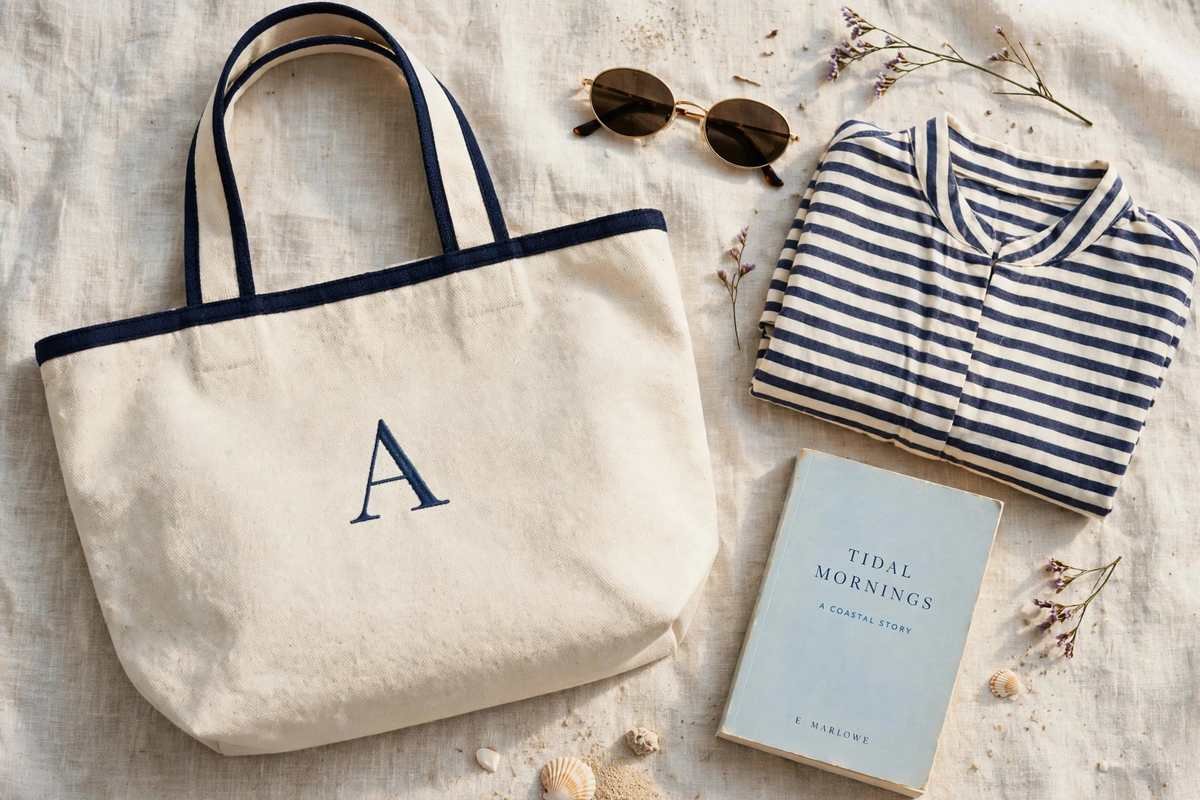
Color and personalization complete the formula. The signature look pairs natural, undyed canvas with contrast handles and trim in navy, red, green, black and seasonal shades. Then there is the monogram: add your initials and a mass-produced classic becomes personal — democratic personalization that never looks like anyone else’s.
How Carolyn Bessette-Kennedy Styled It
Carolyn’s genius was that she never treated the tote as a beach-only bag. On sailing days it sat beside Breton stripes, simple swimwear and cotton shirts. On shore it appeared with her city vocabulary: clean trousers, plain tees, oversized shirts and flat shoes. The bag did not clash with her polish; it softened it.
Notice the color discipline in the photographs. Her tote’s classic palette — natural canvas with dark trim — echoed the neutrals she wore everywhere else, so nothing competed. The slightly rugged texture also created the contrast she loved: a crisp, refined outfit grounded by one practical, unprecious piece. That tension between polish and practicality is the engine of her entire style.
She also carried it with an ease that cannot be bought. The tote was rarely the centerpiece; it was simply there, full and functional. Carolyn’s example suggests: choose the right bag, then forget about it. Her other off-duty formulas reward the same study — start with this guide to recreating Carolyn Bessette-Kennedy’s early 1990s athleisure look.
Seven Ways to Style the Boat and Tote Today
1. The classic sailing look. Channel the original photographs with a navy-and-white striped top, white jeans or shorts, and boat shoes or simple leather sandals. The natural canvas tote with navy handles completes the picture. Add oval sunglasses and pull your hair back — done.
2. City minimalist. Wear the medium tote with black cigarette pants, a white cotton shirt and loafers. The canvas keeps the outfit from feeling stiff, and the tote swallows a laptop, a book and a sweater — city discipline with coastal ease folded in.
3. Slip dress contrast. Pair a simple black or champagne slip dress with flat sandals and let the rugged tote do the unexpected work. The contrast between silk and canvas is exactly the high-low mix Carolyn loved, and it keeps a dress from feeling too precious for daytime.
4. Weekend market uniform. Jeans, a plain white tee, an oversized blazer and the large tote for farmers market flowers, baguettes and whatever catches your eye. The bag is genuinely useful here — no juggling, no plastic bags — and it looks better with every year of use.
5. Travel carry-on companion. The zip-top version earns its keep on planes and trains: books, headphones, a wrap, snacks and toiletries all visible at a glance. It fits under most seats and doubles as your beach or day bag on arrival — one bag, three jobs.
6. Monogrammed matching set. For bridesmaids, sisters or a girls’ sailing weekend, matching monogrammed totes in one trim color make a set everyone will actually keep using. Choose each person’s initials in the same thread for a look that is coordinated, not costume-like.
7. Winter texture play. Do not retire the tote in October. Against a camel coat, dark denim and ankle boots, the pale canvas reads as a deliberate winter white, and the sturdy shape handles umbrellas, gloves and library stacks. Carolyn’s neutral palette worked year-round, and so does this bag.

What to Carry and the Occasions It Suits
For a beach or boat day, pack a towel, sunscreen, water bottle, paperback, sunglasses case, a zip pouch for phone and cards, and a cover-up rolled on top. For work: laptop in a sleeve, notebook, charger and lunch. For a weekend, the extra-large swallows two days of clothes and toiletries in a sealed pouch. Small pouches are the secret — the tote has no built-in organization, so two or three keep the wide interior calm.
As for occasions, the honest answer is almost all of them: school runs, office days, picnics, road trips, boat days, market mornings and casual travel. Where it does not belong is anywhere formal — a wedding, a black-tie evening or a very conservative boardroom still call for a structured bag. Carolyn understood occasion dressing instinctively; her vacation wardrobe shifted effortlessly from day to evening, as this breakdown of the Carolyn Bessette-Kennedy Milan vacation look shows. Knowing where the tote stops is part of styling it well.
Buying Tips: Sizes, Colors and the Dupes Question
Choose size by honest use, not fantasy. The small is a charming everyday carry if you travel light. The medium is the sweet spot for most people — work, errands and day trips — and the size closest to the totes in the famous photographs. Large and extra-large are genuinely big; buy them for the beach house, the boat or family duty. If you commute or travel, pay the small extra for the zip top and long handles; your shoulders will thank you.
For color, natural canvas with navy trim is the timeless, most Carolyn choice. Black trim suits a city wardrobe, red adds classic Americana cheer, and green feels made for garden life. Seasonal colors can be lovely, but this bag may outlive several trend cycles, so choose a trim you will still love in fifteen years — and do add the inexpensive monogram, part of the bag’s heritage.
A word on alternatives and dupes. Buying an honest, unbranded canvas tote from another maker is perfectly fine — canvas totes are a generic, useful form, and many small makers produce beautiful ones. What is not fine is a counterfeit sold as if it were the real thing. Fakes fail on quality first — thinner canvas, weaker handles, stitching that gives up in a season. Since the genuine article is already one of fashion’s most affordable icons, buy the original, or a clearly unbranded alternative you love on its own merits.
Care Tips to Make It Last for Decades
The tote is famously low-maintenance, but a little care stretches its life further. L.L.Bean’s own guidance is to spot clean rather than machine wash, since washing can affect the canvas and monogram. Warm water, mild soap and a soft brush handle most beach and picnic stains, and a few honest scuffs are part of the bag’s charm — a Boat and Tote that looks slightly lived-in looks right.
Dry it thoroughly in open air after wet days and never store it damp; canvas and mildew are old enemies. Store it upright with a towel inside to hold its shape, and check handles and bottom corners once a season. Blot sunscreen and ink stains rather than rubbing, and your tote may well be the one in family photographs thirty years from now.
Closing Thoughts
The Boat and Tote that sailed with Carolyn Bessette-Kennedy endures because it represents a philosophy as much as a product: buy the honest thing, buy it once, and let it gather a life alongside yours. She made it iconic not by dressing it up, but by living in it — on decks, docks and summer streets. Choose your size, pick your trim, add your initials, then do the most Carolyn thing of all: fill it, carry it everywhere, and do not give it another thought.





Leave a Reply